



The History of Dunedin Railway Station

More than a century at the heart of Dunedin
Dunedin Railway Station has stood at the edge of central Dunedin since 1906, but the city's railway story began before the landmark building visitors see today.
As Dunedin grew during the late 19th century, so did its railway network. Earlier stations served the city before plans were developed for a larger railway station capable of meeting the needs of a growing city and rail network.
Building a new station
The site of the present Dunedin Railway Station was selected around the beginning of the 20th century.
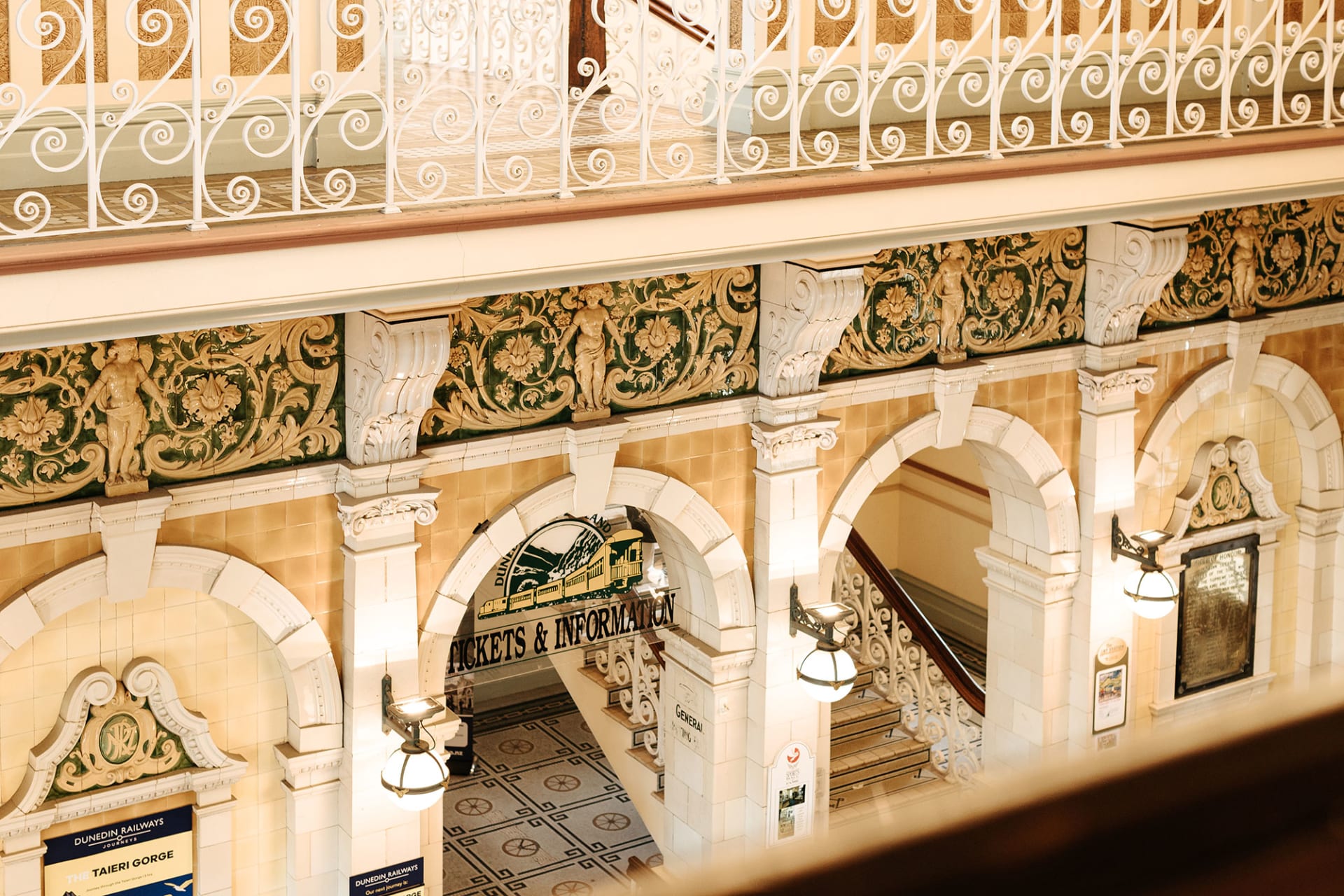
The station was designed by New Zealand Railways architect George Alexander Troup, whose elaborate design would later earn him the nickname “Gingerbread George”.
Construction began in the early 1900s, with the foundation stone laid in 1904.
Dunedin Railway Station officially opened in 1906, with work on the building completed the following year.

A busy railway station
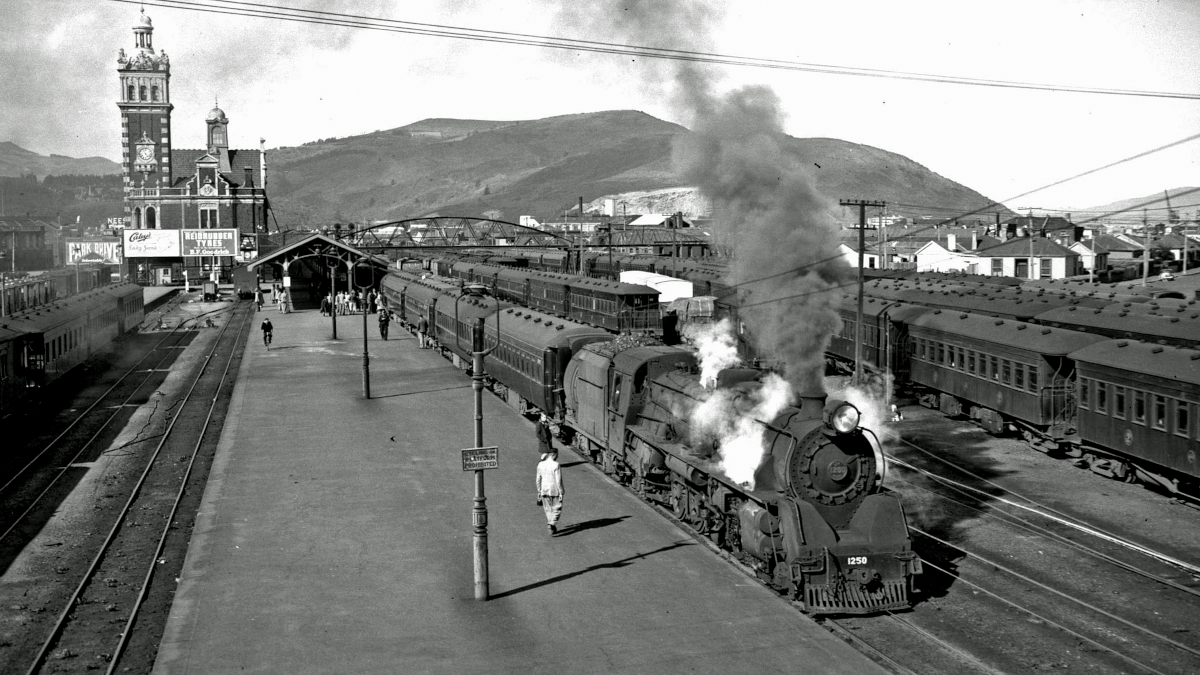
For much of the 20th century, the station was a busy point of arrival and departure.
Passenger trains connected Dunedin with destinations around the South Island, while the railway played an important role in the movement of people and goods through the city.
As road and air travel expanded, passenger rail in New Zealand changed and the role of Dunedin Railway Station changed with it.
Preserving a Dunedin landmark
Despite the changing role of rail, the significance of the building remained.
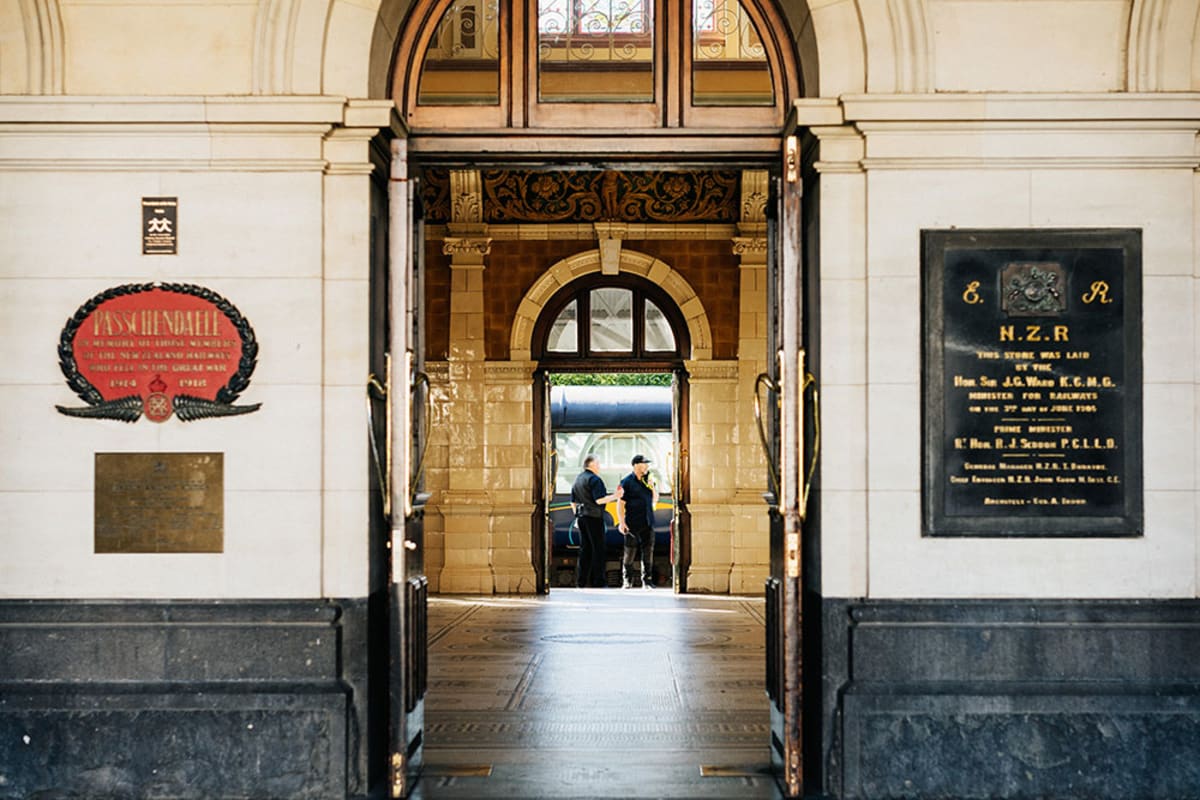
Dunedin Railway Station, including its platform and gates, is recognised as a Category 1 historic place, reflecting its outstanding historical and architectural significance.
A major refurbishment programme began in the 1990s, helping preserve the station and its distinctive interior and exterior features for future generations.
A station that's still in use
Today, Dunedin Railway Station continues to welcome visitors from around New Zealand and the world.
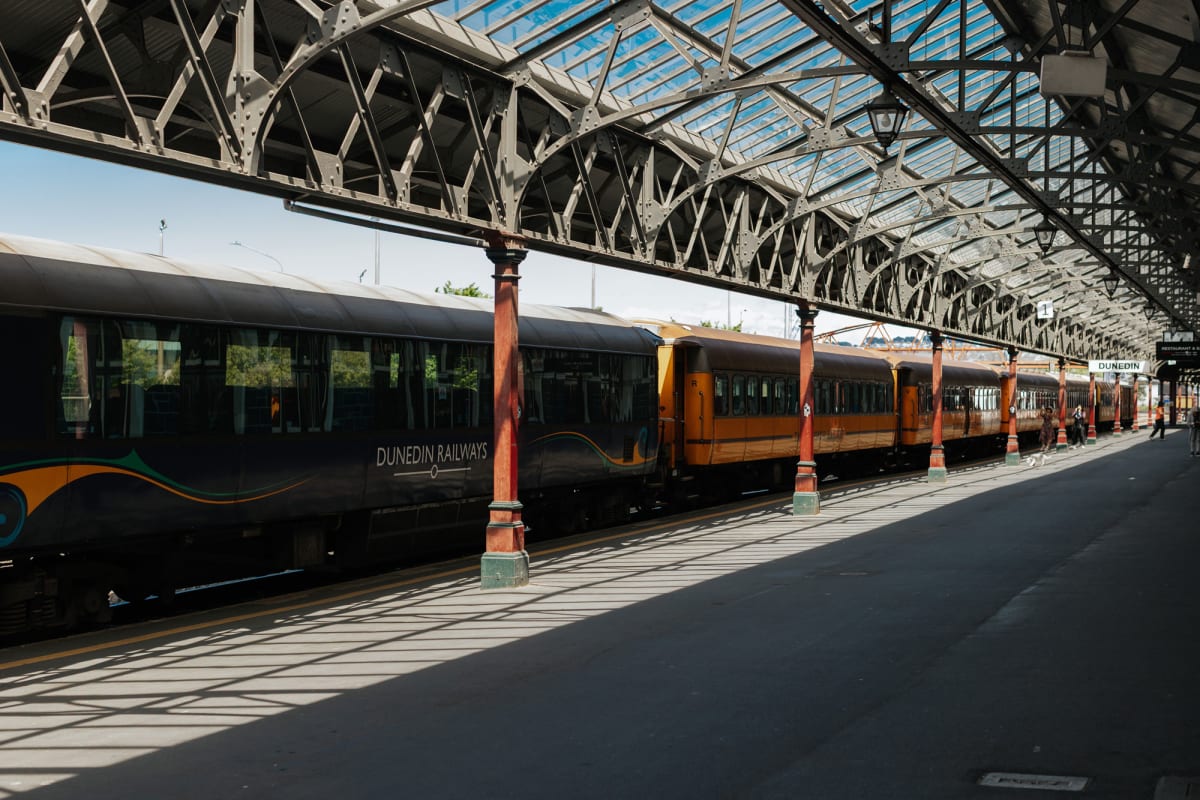
The building is a heritage attraction, home to businesses and experiences, a venue for events and exhibitions, and a working railway station from which scenic passenger trains continue to depart.
Its role has changed considerably since 1906, but the station remains closely connected with the reason it was built in the first place: rail.

Dunedin Railway Station Timeline
1872
Dunedin's first railway station
Dunedin's first station was built near the intersection of High and Rattray Streets. Two further stations would follow as the city's rail network and passenger numbers grew.
1904
Foundation stone laid
Construction of George Alexander Troup's new station was underway, with the foundation stone laid in June 1904.
1906
Dunedin Railway Station opens
The new Dunedin Railway Station officially opened in 1906. At the time, Dunedin was New Zealand's busiest railway station.
1907
Construction completed
Work on the station was completed in 1907, marking the completion of Troup's landmark design.
1960s
Preserving the building
The station underwent significant work, including strengthening of the tower and the careful relaying of its distinctive mosaic floor.
1994–95
A new chapter
Dunedin City Council took possession of the station in 1994, followed by a major programme of refurbishment beginning in 1995. Heritage New Zealand
Today
Still a working railway station
More than a century after opening, Dunedin Railway Station remains both a heritage landmark and a working station, welcoming visitors and serving as the departure point for scenic rail journeys.